|
Mozart Festival's Music for Young People
From Channel 3 News Shelburne, Vermont - July 20, 2008 Review Excerpt of Mary Lou Williams Jazzfest From Jazztimes May 2008 By Larry Appelbaum "The opening act of the second night, pianist Helen Sung, offered one of the strongest sets of the entire festival. Leading a quartet with saxophonist Steve Wilson, bassist Richie Goods and drummer Donald Edwards, Sung served up a medley of Monk tunes, including "In Walked Bud," "Bye-Ya" and "Bright Mississippi" (based on "Sweet Georgia Brown"). Her arrangement made imaginative use of disguised intros, vamp transitions between solos, and off-kilter dissonance in her left hand comping. Sung’s classical studies were obvious in her ...imaginative use of disguised intros, vamp transitions between solos, and off-kilter dissonance in her left hand comping.
expressive touch and rubato approach on "Shall We Tango," as Goods played triple stops and Edwards locked into a Poinciana beat.
Sung, who won the Mary Lou Williams Women in Jazz piano competition last year, helped present this year’s saxophone competition award to young Hailey Mae Niswanger. The festival then gave its biggest Women in Jazz award to vocalist Sheila Jordan. It was an inspired choice, as Jordan embodies the generosity, commitment and creative spirit of Williams. At age 79, Jordan has lost some of her breath control, which affects her intonation, but she hit the festival’s emotional high point as she accepted her award and sang her thanks to Charlie Parker a cappella. She also reminisced that "Every time I come to D.C. I think of my dear friend Shirley Horn." ... Read the complete review Review of Sungbird (after Albeniz) From Jazztimes By Scott Albin For the pianist’s third CD (not counting Live at the Blue Note, only available online), Helen Sung has chosen to go in a completely new direction. While last year’s excellent trio release, Helenistique, focused on standards and jazz classics, with Sungbird (after Albéniz) she returns to her musical roots. Classically trained, Sung didn’t pick up on jazz until college, and then went on to become a semi-finalist in the 1999 Thelonious Monk Jazz Piano Competition. In 2006 she took the band on this CD—saxman Marcus Strickland, bassist Reuben Rogers and drummer Nasheet Waits This successful project will appeal to both jazz and classical listeners. (but not percussionist Samuel Torres)—on a tour of Spain and Andorra. She decided to arrange for the group a classical work by a Spanish composer, and chose "España, Op.165," a suite of six pieces for solo piano, written in 1890 by Isaac Albéniz.
Sung movingly performs the six short pieces solo on this recording, with little embellishment, the music an engaging combination of standard classical forms and Spanish folk idioms such as flamenco, tango, malaguena and zortzico. They served as inspiration for her own compositions that fill out the CD (albeit still only a disappointing 42:37 in length). Sung and Strickland (on tenor and soprano) both deliver crisply articulated and soundly constructed solos on the pianist’s lilting "Shall We Tango," the tango/waltz tempoed "Sungbird," and the intense "Free Fusion," the latter remindful in its exuberant spirit of Michel Camilo. Rogers solos authoritatively on his features, "Malaguena Miniatura" and "Capricho American." Waits provides tasteful and assured rhythm support on all these tunes. This successful project will appeal to both jazz and classical listeners. Review of Sungbird (after Albeniz) From Billboard By Ken Dryden, All Music Guide Pianist Helen Sung's third CD as a leader heads in a different direction. During a European tour, she decided to look for some Spanish classical work to adapt for her group, choosing Isaac Albéniz's Espana, Op. 156. But for this recording, she intermingled her own compositions with solo piano interpretations of individual movements of Albéniz's work, creating a seamless recording in which one composer's contributions complement the other's. Sung... leaves the listener wanting more. Her classical background is apparent, though she takes some liberties with the Albéniz's melodies. On the quintet tracks, her supporting band, including Marcus Strickland (tenor and soprano saxophones), bassist Reuben Rogers, drummer Nasheet Waits and percussionist Samuel Torres, follow her muse and bring out the full potential of her catchy tunes. Clocking just under 43 minutes, Sung actually leaves the listener wanting more.
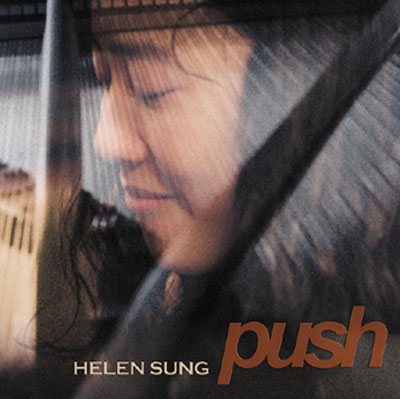
Review of Sungbird (after Albeniz) From Billboard By Dan McClenaghan Pianist/composer Helen Sung could have played it safe. After offering up two fine straight ahead jazz outings— Push (Blue Moon, 2004) and Helenistique, (Fresh Sound New Talent, 2006), the expectation was "more of the same." And that would not have been a disappointment. Though the New York based artist came to jazz late—during her college years, after early studies in classical music—she came out swinging sweet and lovely on those first two discs. With Sungbird (After Albeniz), the artist takes off on a different tangent, returning, to an extent, to her classical roots. Sung performs Spanish pianist/composer Isaac Albeniz' six piece work for solo piano, Espana, along with her own loose interpretations of the work in six original compositions employing a sax and rhythm section jazz quartet and added percussionist. ...classical/jazz tunes are interwoven, highlighting the differences and similarities of the sounds.
Sung describes Espana as: "...beautifully-written pieces that were distinctive, simple yet profound, concise and with room for adaptation." They are all of that; and so are her compositions. Her six pieces tint the jazz sound with a classical hue. The title tune has a light, airy swing—Marcus Strickland, on soprano sax, is awesome here, with a sweet, delicate strength to his tone—and "Capricho American," following Albeniz' "Capricho Catalan," is arranged with a string quartet steeped-in-the-blues feeling—check out Reuben Roger's bass moving back and forth from bowed to plucked, with Strickland's tenor sax floating over the top.
"Shall We Tango" has a gentle momentum, a light bounce in its step, with Sung splashing gorgeously in front of drummer Nasheet Waits' soft, insistent rumble, while "Free Fusion" begins with Sung soloing in an abstract mode before the quartet joins her and finds a groove. The Albeniz/Sung, classical/jazz tunes are interwoven, highlighting the differences and similarities of the sounds. Sung says: "Jazz certainly uses elements of classical music, but it definitely is its own thang," (she's from Houston). And then she goes and marries the two forms into a beautiful union. Interview with Helen Sung Reprinted with permissions from New Jersey Jazz Society By Schaen Fox Open PDF to View » Review of Sungbird (after Albeniz) From All About Jazz Los Angeles By George W. Harris Get your credit cards out for buying this one, it’s a real winner. Very rarely has the combination of jazz and classical genre’s worked out. Miles’ "Sketches of Spain" and MJQ’s "Blues on Bach" just about covers it, and it’s understandable if you’re skittish about trying it again. Pianist Helen Sung has done it right, intertwining solo piano works in the Romantic vein with mixtures of band pieces that imbibe influences ...you will be as fascinated by this disc on the 20th listening as on the first.
from Coltrane to Jamal. Six of the compositions are from the
19th century composer Isaac Albeniz, yet Sung brings them up to date in a stirringly remarkable fashion.
Compositions like "Prelude", "Tango" and Capticho Catalan" are exquisite, intimate and fluorescent
pieces that conjure up images of Basque countryside. Meanwhile, Sung’s own "Preamble", is reminiscent
of Coltrane’s "Crescent", and "Shall We Tango?" harkens back to Pershing Room Ahmad Jamal.
Marcus Strickland gives off some remarkably restrained sax work on the session, being able to show
feeling and emotion without breaking the desired atmosphere, no small feat.
The rhythm section of Samuel Torres (percussion), Nasheet Waits (d) and Reuben Robers (b) is
sympathetic without being overly deferential. They know they are onto something important on this recording.
I personally guarantee you will be as fascinated by this disc on the 20th listening as on the first. Find it now!
Review of Helenistique From the Hartford Courant By Owen McNally Helen Sung, a pianist with classical chops and jazz street smarts, is on a roll this year, completing her first international tour as a band leader and now riding the wave of this excellent, high-octane release. Although Sung was a semifinalist in the 1999 Thelonious Monk Jazz Piano competition and has worked for such renowned band leaders as Clark Terry, T.S. Monk and Regina Carter, she hasn't yet received the recognition she merits for her dazzling playing. Right from the first track - an original dedicated to her hometown of Houston - Sung's singing lines and bright, crisp sound come shining through as fleet and fine as Phineas Newborn. Whatever tune she plays, whether Thelonious Monk's "Bye Ya" or Joe Henderson's "Black Narcissus," becomes her own thing. Rodgers and Hart's "Lover" glides as elegantly as a classic Fred and Ginger waltz before rocketing into 4/4. Prince's "Alphabet Street" dances to a funky backbeat, then surges into hard-swinging jazz. Sung's bouquet of evergreens ranges from a lover's heartfelt reading of "Sweet and Lovely" to a finger-popping, foot-stomping romp through "Carolina Shout," the venerable James P. Johnson's rollicking tour de force. Sung's sidemen, Lewis Nash, a brilliant, empathetic drummer; and Derrick Hodge, a phenomenal young bassist, are totally in sync with their leader's imaginative improvisations and arrangements. Review of Helenistique From Skanner Newspapers July 5, 2006 By Dick Bogle This young pianist studied with some of the masters, including Ron Carter, Clark Terry, Barry Harris and Jackie McLean. Helen Sung, heard on this release with bassist Derrick Hodge and drummer Lewis Nash, is creative and has a unique sound. Because of her sheer artistry, once this relative unknown is heard for the first time, she will convert the listener to an unabashed fan. Her individualistic style is captured on tunes like "Lover," "Sweet and Lovely," "Cotton Tail," "Bye Ya," "Willow Weep for Me" and more. |